

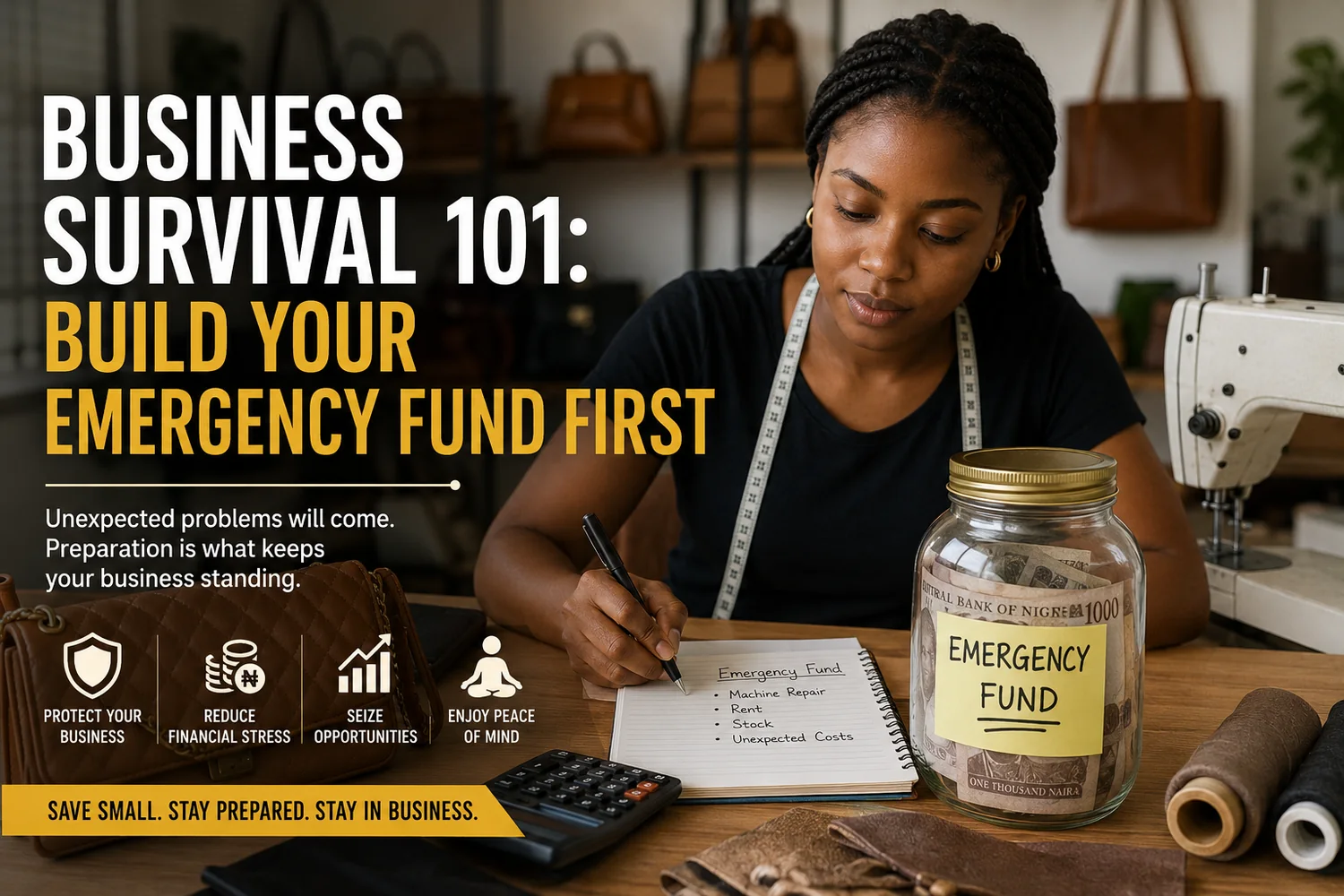
Let me tell you about Chioma.
Chioma makes beautiful handmade bags. The kind people stop to admire before asking the price. Her business was growing steadily. Orders were coming in. Customers were referring their friends. For the first time in a long while, she felt like things were finally working.
Then one morning, her sewing machine stopped working.
No warning. No strange sound the night before. It just died.
The repairer checked it and shook his head. She needed a new machine. Fast.
The problem was not only the ₦150,000 cost. The real problem was that all her money was trapped inside her business. Stock. Materials. Pending orders. Daily expenses.
She had customers waiting, but no machine to work with.
No bank could help quickly enough. Family members had their own struggles. In desperation, she borrowed from someone who charged outrageous interest.
By the time she finished paying back the money, a ₦150,000 problem had cost her ₦300,000.
Not because she was careless.
Not because she was lazy.
But because she had no emergency fund.
And honestly, many small business owners are living exactly like that.
In Nigeria, business problems rarely send warnings before they arrive.
A supplier disappoints you suddenly, and now you have to buy elsewhere at a higher price.
Rain enters through the shop roof overnight and damages your goods.
Your phone falls into water, and suddenly years of customer contacts disappear.
Your delivery bike breaks down in the middle of an urgent order.
Your landlord increases rent when you least expect it.
These things are not rare. They are normal parts of doing business here.
The difference between businesses that survive these moments and businesses that collapse is often one simple thing: preparation.
That is what an emergency fund really is.
Not extra money for enjoyment.
Not money for impulse buying.
Not money for “I will replace it later.”
It is survival money.
Money that exists quietly in the background for the days life decides to test you.
Think of it like the shock absorber of your business. When the road becomes rough, it stops one bad moment from destroying everything.
And the truth is, building one is less about how much you earn and more about consistency.
Many people hear “emergency fund” and immediately imagine millions sitting in an account somewhere. That thought alone discourages them before they even begin.
But the goal is not perfection overnight.
The goal is simply to start.
Even ₦5,000 saved intentionally is better than zero.
Even ₦1,000 set aside every week creates something.
Small amounts stop feeling small when emergencies arrive.
One of the biggest mistakes business owners make is mixing emergency money with everyday money. Once everything sits together, discipline disappears.
You tell yourself:
“I’ll replace it tomorrow.”
“I’ll borrow small from it.”
“Let me use it for stock first.”
And slowly the emergency fund disappears before any emergency even comes.
That is why it helps to separate it completely.
Different account.
Different wallet.
Different envelope.
Different mindset.
Something that forces you to pause before touching it.
Because once money becomes too easy to access emotionally, it becomes difficult to protect financially.
And not every problem qualifies as an emergency.
That part is important.
A real emergency is your main machine breaking down. A medical issue. Rent that threatens your shop. A business crisis that can stop income completely.
A discounted product you suddenly want to buy is not an emergency.
A new phone is not an emergency.
Covering unnecessary spending is not an emergency.
If you use emergency money for ordinary wants, you will have nothing left for extraordinary problems.
The smartest business owners learn how to save without making themselves miserable.
Some people save a percentage from every sale.
Others save the profit from their first customer of the day.
Some save unexpected money: bonuses, gifts, refunds, extra income.
There is no perfect method. What matters is finding one that fits your life enough for you to continue.
Because consistency matters more than intensity.
What changes when you finally have an emergency fund is not just your finances.
It is your peace of mind.
That was what Chioma noticed first.
After the sewing machine incident, she started saving slowly. Painfully sometimes. But consistently.
Months later, her supplier suddenly announced a price increase. Everyone rushed to buy stock before prices jumped completely.
Most people around her panicked because they had no spare cash.
Chioma did not panic.
She used part of her emergency fund to secure inventory early, sold the products later, and rebuilt the fund without borrowing from anybody.
For the first time, she realized something powerful:
She had stopped depending on panic.
She had become her own backup plan.
That is the real power of an emergency fund.
Not just survival.
Freedom.
Freedom from desperate borrowing.
Freedom from bad financial decisions.
Freedom from living one problem away from collapse.
And honestly, that kind of peace is difficult to describe until you experience it.
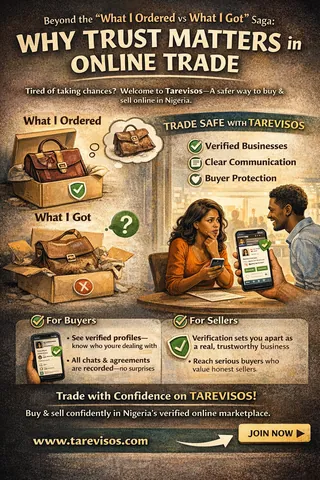
This is also where platforms like Tarevisos
quietly become valuable for serious business owners.
When your business has history, reputation, and visible transactions, people trust you differently. Suppliers take you more seriously. Buyers feel more confident. Opportunities open faster.
And when opportunities come, emergency savings help you move quickly.
A supplier offers bulk goods at a lower price.
A verified seller gives limited-time access.
A business opportunity appears suddenly.
People living sale-to-sale often cannot move fast enough to take advantage of these moments.
But people with financial breathing space can.
That is the hidden side of emergency funds nobody talks about enough. They do not only protect you from bad days. They position you for good days too.
So maybe the real question is not:
“Can I afford to save?”
Maybe the better question is:
“What will happen if I don’t?”
Because emergencies will come eventually.
The machine will stop working.
The customer will delay payment.
The rent will increase.
Something unexpected will happen.
Life does not ask for permission first.
But preparation changes how deeply those moments hurt you.
So start small.
Even ₦500.
Even ₦200.
Even ₦100.
What matters is building the habit before the emergency arrives.
Because one day, that small emergency fund may become the exact reason your business survives when others around you are falling apart.
And honestly, every business owner deserves that kind of safety.
You deserve that kind of peace.
Discover businesses that can help you move forward.
Search manufacturers, suppliers, distributors and service providers through the Tarevisos directory.
Explore Businesses

Join the conversation.
Share a useful perspective or question related to this article.